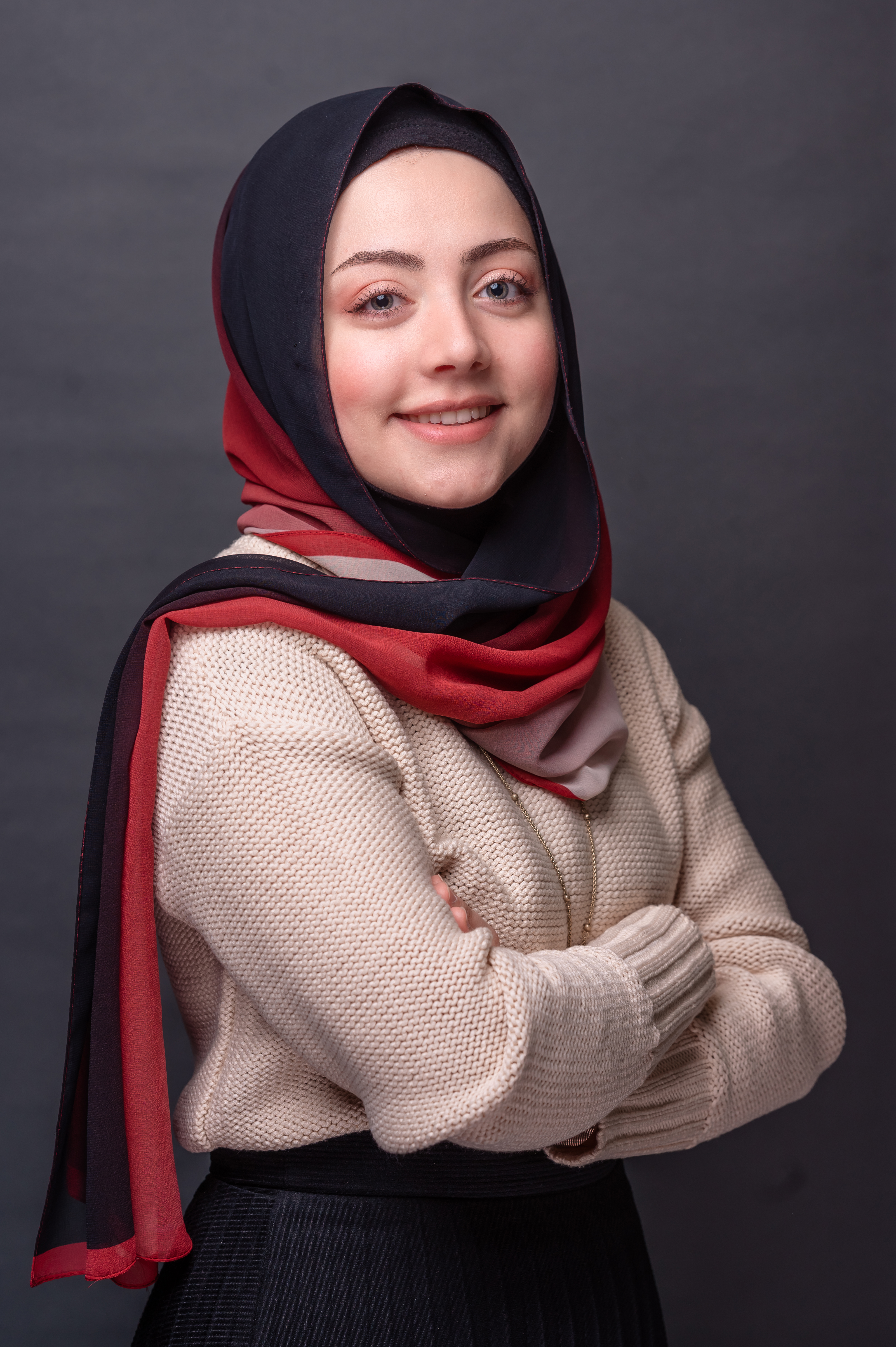
Diala Lteif

Computer Vision and Multimodal AI Researcher

View CV Contact

About

I recently completed my PhD in Computer Science at Boston University, where I worked across the Image and Video Computing Group and the Kolachalama Laboratory at the BU School of Medicine. My research sits at the intersection of computer vision, multimodal AI, and medical imaging, with a focus on building robust, interpretable, and clinically relevant deep learning frameworks.

My dissertation was centered on knowledge-guided representation learning for multimodal neuroimaging analysis. Throughout the years, I have collaborated with interdisciplinary teams across computer science and medicine and gained extensive hands-on experience with clinical, real-world data. I am currently seeking full-time roles where rigorous ML research and real-world impact meet.

Interests

  • Computer Vision
  • Multimodal AI
  • Medical Imaging
  • Trustworthy Machine Learning

Education

  • PhD in Computer Science, 2019 - 2026

    Boston University

  • BSc in Computer Science, 2016 - 2019

    American University of Beirut

Experience

Research

  • Research Fellow, Summer 2021 - 2026

    Boston University, Department of Computer Science & School of Medicine

    Led research on multimodal neuroimaging and dementia assessment, spanning domain generalization, incomplete multimodal learning, and vision-language modeling.

    Published first-author work in Human Brain Mapping and co-authored work in Nature Medicine, with a focus on robust and clinically meaningful deep learning systems.

  • Research Fellow, 2020 - 2021

    Boston University, Department of Computer Science

    Developed methods for cross-layer parameter sharing and resource-efficient transfer learning for computer vision models.

  • Research Fellow, 2020 - 2022

    Boston University, Department of Computer Science

    Worked on spatiotemporal visualization and explainability methods for deep video classification models.

Industry

  • Applied AI/ML Scientist Intern, June 2022 - Sept 2022

    Inari Medical Inc., Irvine, California, United States

    Designed AI solutions for intravascular ultrasound imaging used in minimally invasive endovascular procedures.

    Worked at the intersection of model development, medical imaging, and translational product-focused research.

  • Intern, Aug 2018 - Sept 2018

    PinPay s.a.l., Beirut Digital District, Lebanon

    Built voice-assistant integrations and contributed to front-end web development.

Teaching

  • Teaching Fellow, Sept 2019 - Dec 2025

    Boston University, Department of Computer Science

    Served as teaching fellow across machine learning, image and video computing, algorithms, formal methods, and web programming courses.

  • Instructor, July 2018

    Future Developer Summer Camp, American University of Beirut, Lebanon

    Taught Unity and iOS development to students between the ages 12 and 18.

  • Instructor, Feb 2017 - May 2017

    S.A.S. Tutoring Center, Beirut, Lebanon

    Taught Biology, Chemistry, and Physics to high school students.

Selected Publications

A few publications that best reflect my work in robust medical imaging and multimodal AI.

Vision-language framework for multi-sequence brain magnetic resonance imaging
Anatomy-guided, modality-agnostic segmentation of neuroimaging abnormalities
AI-based differential diagnosis of dementia etiologies on multimodal data.
Disease-driven domain generalization for neuroimaging-based assessment of Alzheimer’s disease.

All Publications

Vision-language framework for multi-sequence brain magnetic resonance imaging

Structural magnetic resonance imaging (MRI) is a cornerstone for diagnosing neurological disorders, yet automated interpretation of …

Anatomy-guided, modality-agnostic segmentation of neuroimaging abnormalities

Magnetic resonance imaging (MRI) offers multiple sequences that provide complementary views of brain anatomy and pathology. However, …

AI-based differential diagnosis of dementia etiologies on multimodal data.

Differential diagnosis of dementia remains a challenge in neurology due to symptom overlap across etiologies, yet it is crucial for …

Disease-driven domain generalization for neuroimaging-based assessment of Alzheimer’s disease.

Development of deep learning models to evaluate structural brain changes caused by cognitive impairment in MRI scans holds significant …

VisDA 2022 Challenge: Domain Adaptation for Industrial Waste Sorting

Label-efficient and reliable semantic segmentation is essential for many real-life applications, especially for industrial settings …

Ani-GIFs: A benchmark dataset for domain generalization of action recognition from GIFs.

Deep learning models perform remarkably well for the same task under the assumption that data is always coming from the same …

Contact